The Shyvers Multiphone may not be as well known as Spotify, but for your music loving Boomer parents and even their parents living in the Seattle area, it was just as important.
This is a blog about a 1939 invention: The Shyvers Multiphone.
A few years ago, I visited an antique mall in downtown Edmonds, Washington that had been a fixture of the Puget Sound town for years. I found myself in the middle of an antique mall closing. Vendors were busy packing boxes of unsold stuff. You know, vinyl records, vintage tools, antique pottery, and so on. A handful of customers roamed the floor.
It was sad to see the mall go. The building had its original wood floor and exposed Old Growth Douglas fir beams. It had been a dance hall in the 1940s and one could still imagine patrons swinging to the big band sound of Glenn Miller and Benny Goodman.
I’d been in the mall before. And I distinctly remembered seeing several glass domed objects that looked like those old wall mounted jukeboxes that were in every 1960s diner booth. Except these machines were clearly from the 1930s art deco period. They were shaped like the Empire State Building, the iconic deco building of the time. Clearly, these strange devices were left over from Edmonds’s early wartime dance hall days. They were about 20 inches high. These old jukeboxes weren’t for sale, I recalled. Only for ambience in the antique store.
But the antique store was closing and the jukeboxes that were once on the walls had been removed and were now lined up on the counter at the cash register. And they were for sale.
I spent my rent money on two of them.
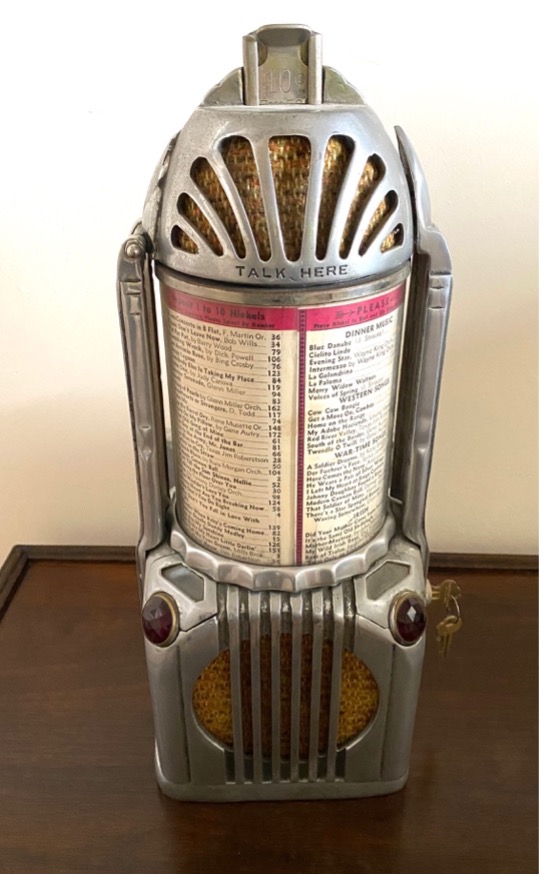
My Shyvers Multiphone circa 1940s
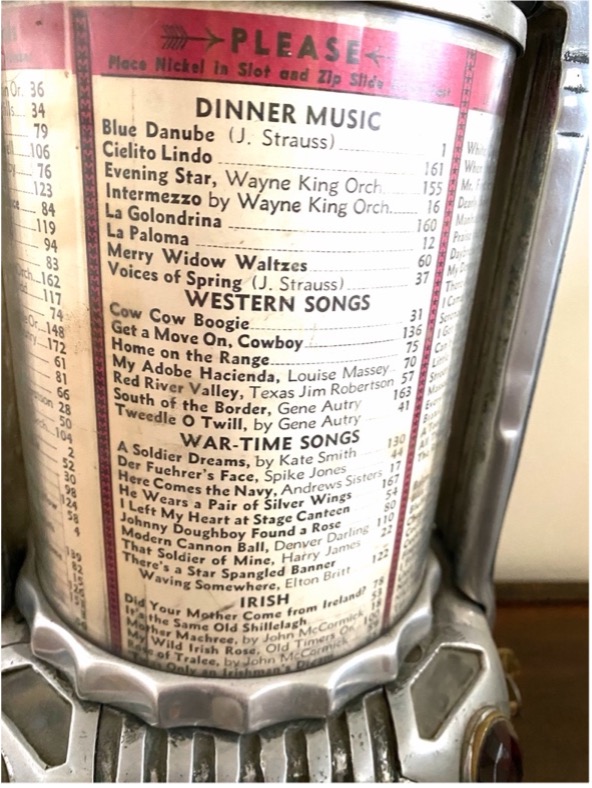
Patrons would connect by phone line to a DJ in Seattle.
The Shyvers Multiphone was invented in 1939 by Seattleite Ken Shyvers, founder of the Shyvers Coin-Automatic Company. Thanks to Ken Shyver and his company, the Pacific Northwest was an early leader in the coin-operated jukebox industry.
Shyvers fabricated and sold the Multiphone to scores of bars in Puget Sound from 1939 to 1959. Music lovers would insert a nickel into the machine and in turn, be connected (by telephone line) to a “Central Music” studio in downtown Seattle (or Bremerton, Spokane or Tacoma). An operator would pick up the call and play the requested records over the phone line. All the operators were women. When interviewed years later about their unique job as DJs, several mentioned talking to lonely soldiers and sailors returning from the Pacific Theatre during World War II.
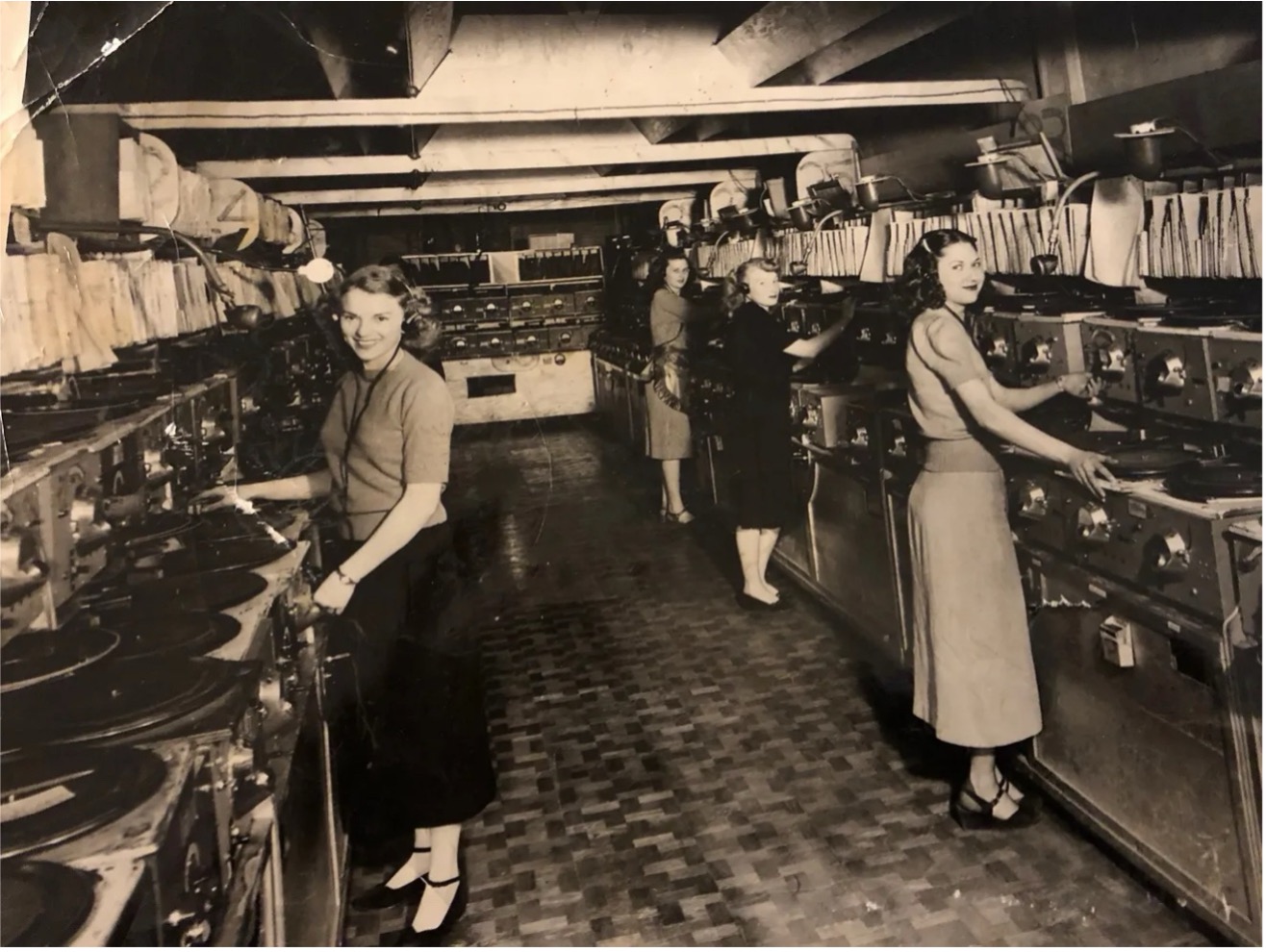
DJs playing music at the Shyvers Central Music facility in Seattle
The crazy thing about Ken Shyvers, inventor of the Multiphone, is that he also invented the pinball machine. That’s right, Ken Shyvers of Seattle invented pinball machines, the singular, iconic amusement contraption of mid-century America.
The Multiphone and the pinball machine seem like quaint and harmless entertainment for the masses of yesteryear. You couldn’t imagine a dark side. But there was one.
Both the pinball machine and the Multiphone were money makers and they attracted organized crime. The pinball machines were especially vulnerable to mob control because they were used for illegal gambling that provided kickbacks to bar owners. The mob offered protection from the police and other criminal gangs, for a price of course. The kickbacks and protection racket got so bad, that the City of Seattle tried to ban Shyvers’ pinball machines. That didn’t last, so they started licensing and taxing them. But the mob’s tentacles were long in Seattle and the murders and chaos continued. The Seattle pinball and jukebox wars were notorious for car bombings. If the mob didn’t get a kickback from the lucrative Multiphone, an operative would stuff a cluster of matches into a speaker, vent or coin return to burn up the electronics inside it.
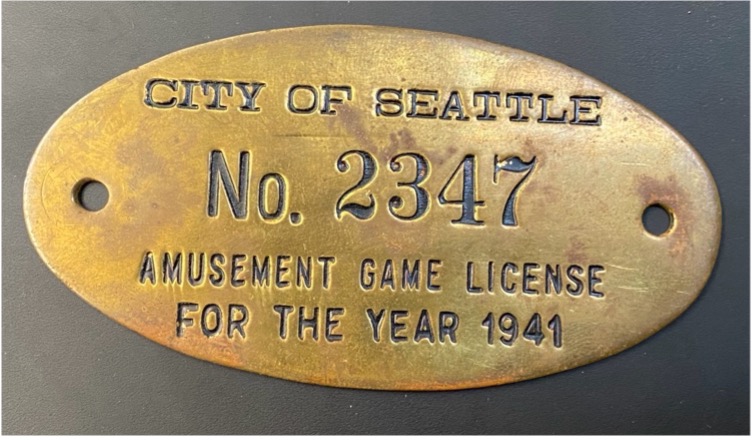
Crime followed the lucrative jukebox and pinball machine business, prompting Seattle to license and regulate their use.
By the 1970s, the Multiphone was long gone, replaced by sophisticated jukeboxes that played records without the need for a phone line or help from remote Disc Jockeys. Pinball machines had become benign, fun machines that were primarily played by teens in arcades in shopping malls. The mob had lost interest in the coin operated machine world, turning instead to more lucrative crime.
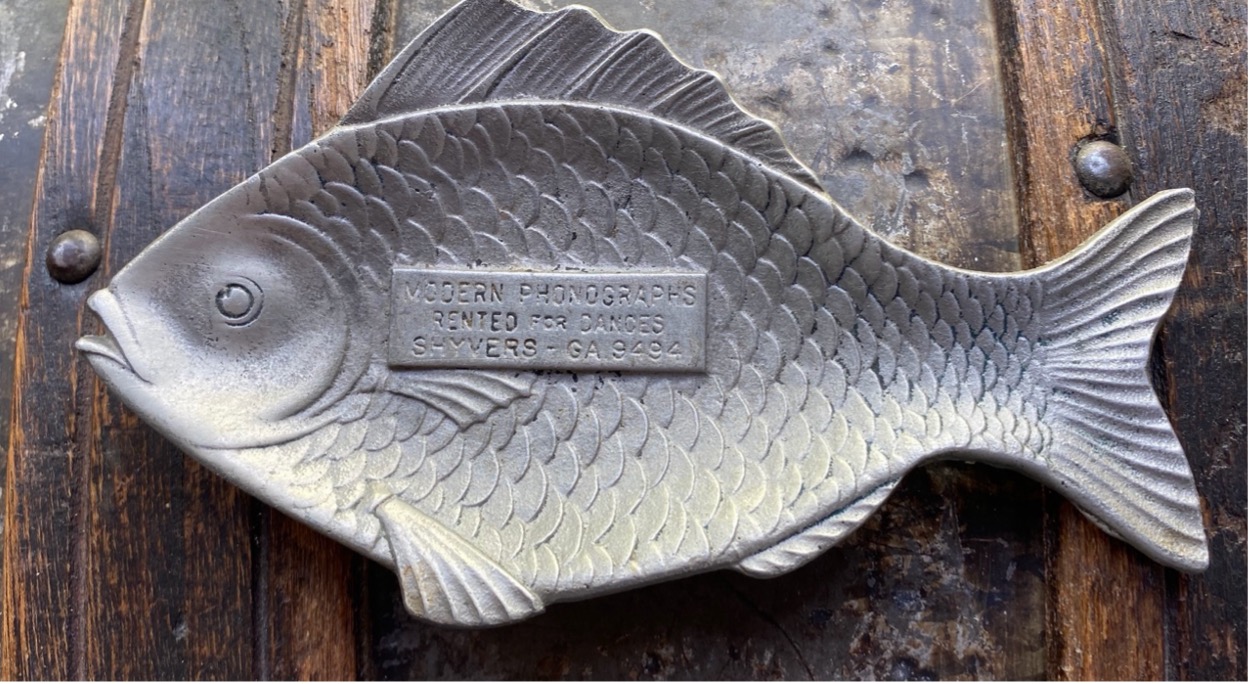
A very rare Shyver fish advertising ash tray found in an antique mall in Port Angeles, WA. Probably from the late 1940s or 1950s. “Modern Phonographs Rented for Dances.”
Throughout all this, Ken Shyvers managed to remain clean. There is no evidence that Shyvers had any connection to the mob or organized crime at all. He insisted his pinball machines were games of skill and competition and not for gambling. He was profoundly upset that his Multiphone had become a target of organized crime who insisted on a cut of the proceeds, or else. Even with this sad demise, the Shyver Multiphone harkens to a simpler and more romantic time in Seattle history, sans the mob stuff of course!