When the Artemis II made its splashdown a couple of weeks ago, I thought of something I had related to the original Apollo moon missions back in the 1960s.
It’s a trophy of some kind and I found it in 2013 at a yard sale in Des Moines (the one in Washington State, not the one in Iowa). I remember it sitting on a table with old toys and records (or “vinyl” as the kids call it today). The trophy figure looked like a futuristic spaceman-slash-cowboy with jet packs.
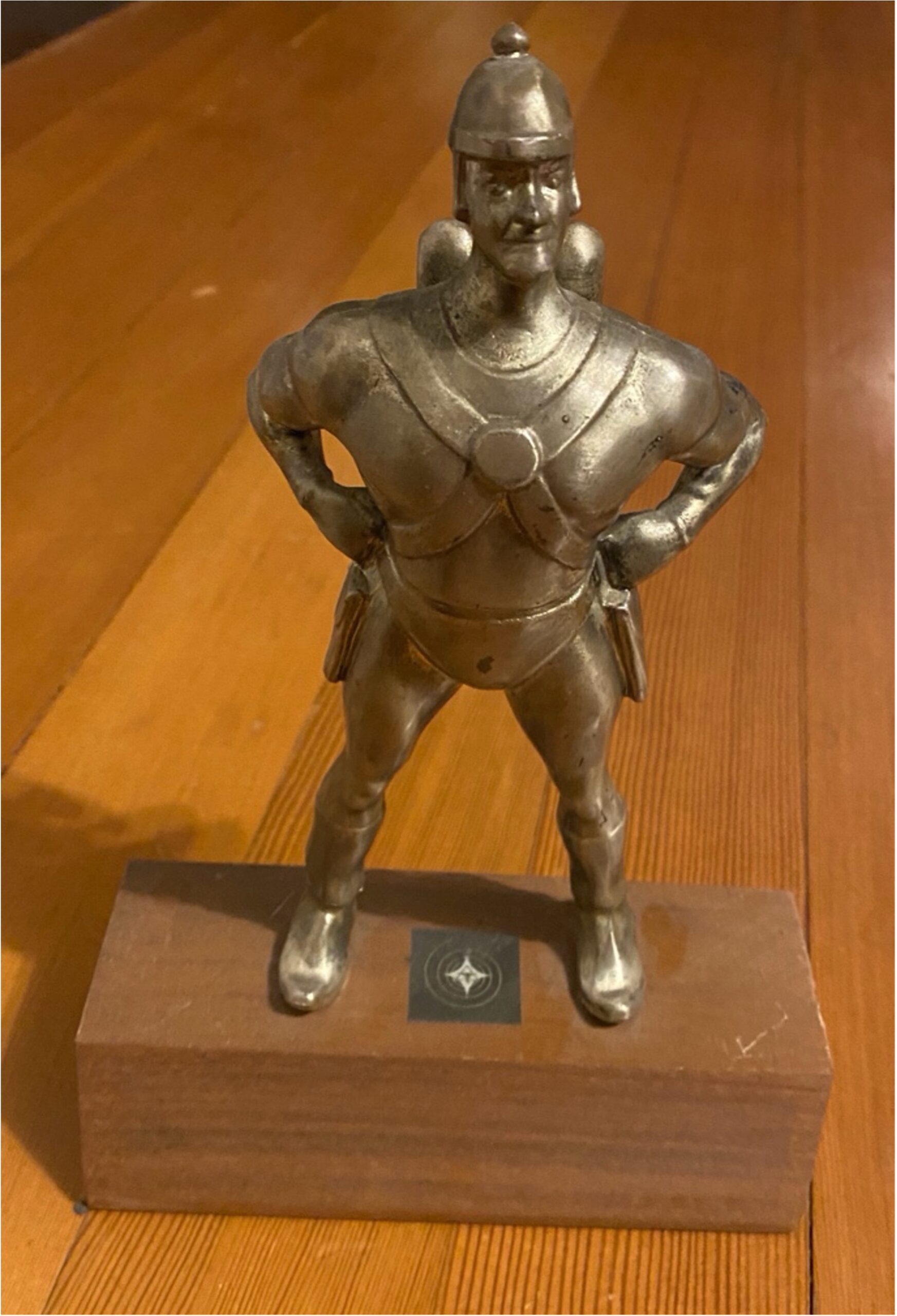
Mystery Trophy
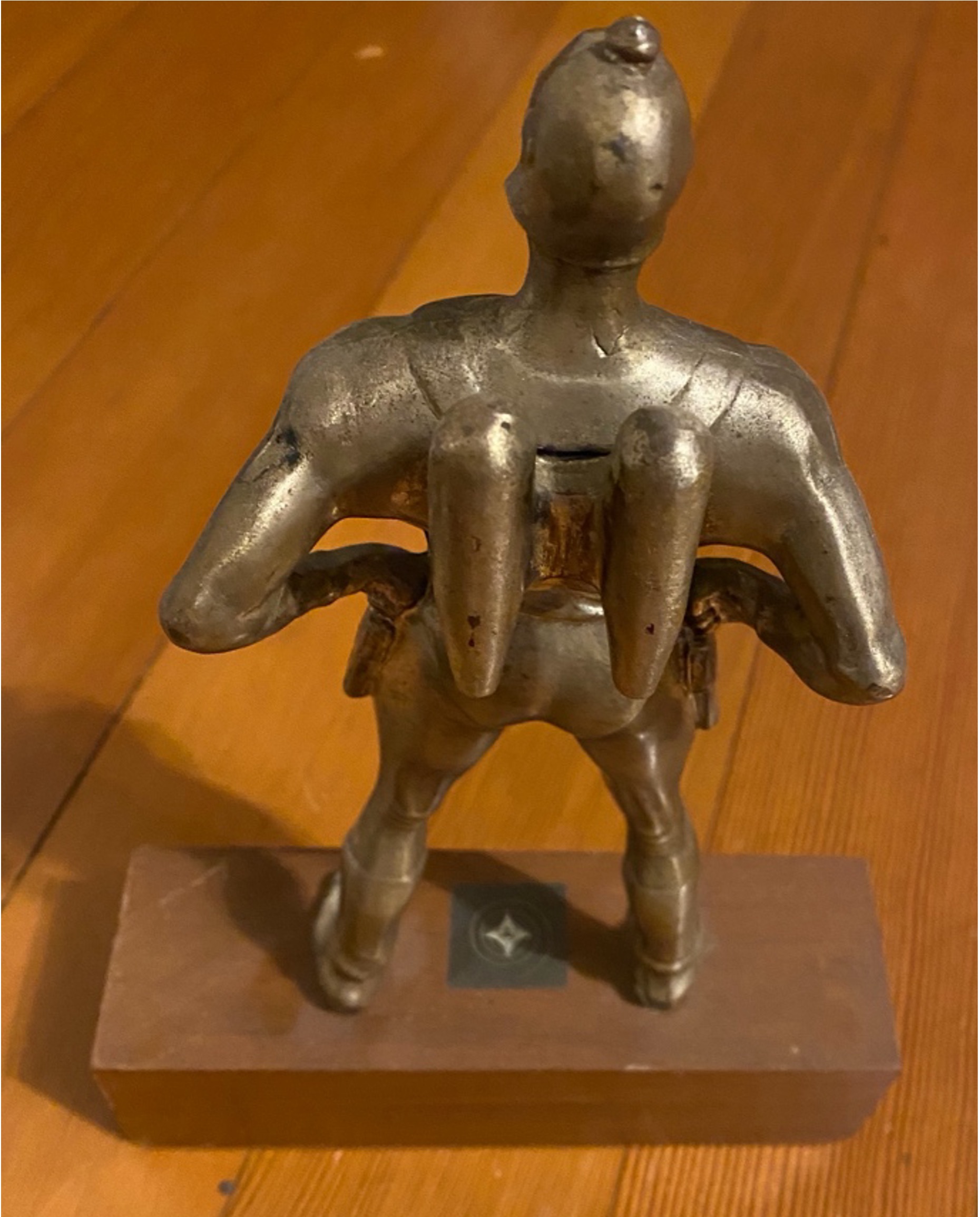
Jetpacks on back of Mystery Trophy
I knew from my father’s old attic toys that it was Buck Rogers, or something like Buck Rogers. Not the 80s TV show, but the one played by Buster Crabbe in the 1930s who wakes from suspended animation in the 25th century to save the world from Killer Kane.
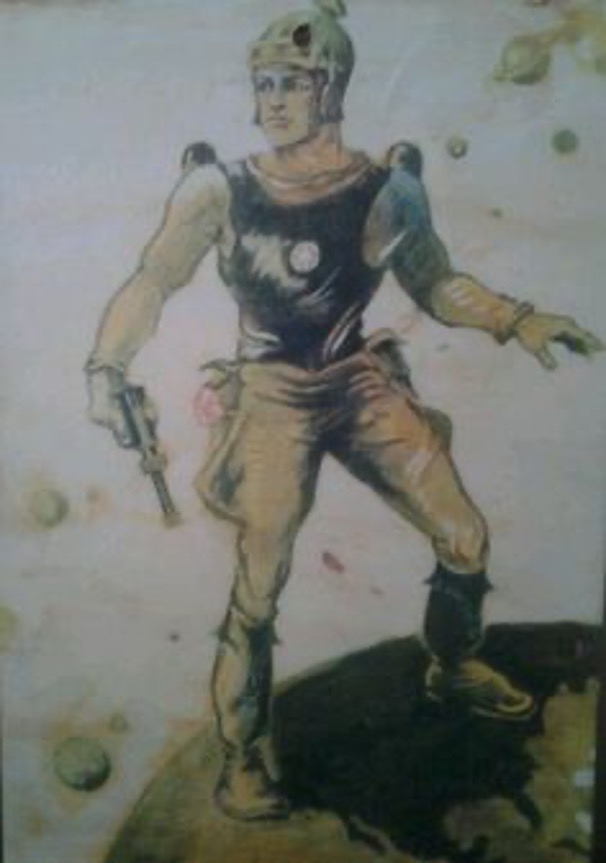
Buck Rogers 1930s
But a trophy? How do you win a Buck Rogers trophy? The trophy was way too refined to be something for a kid. It was made of brass or pewter and the casting was flawless, meaning some foundry took their time to do it right. The base was solid oak.
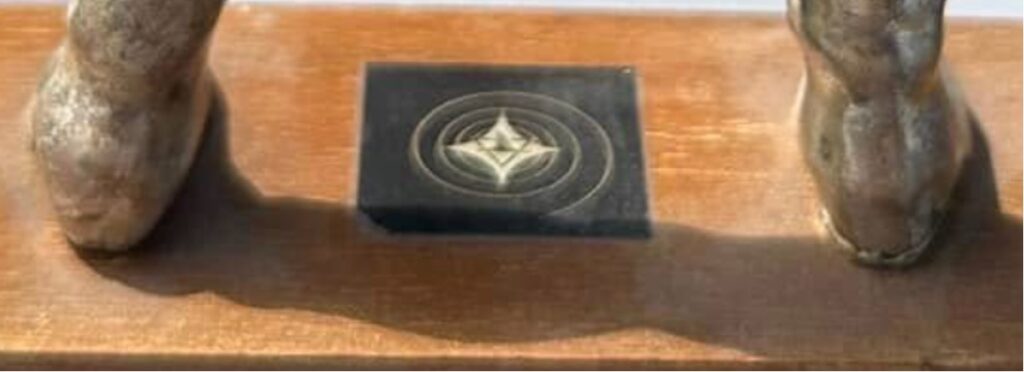
I could see the nameplate had been removed. But there was a weird company logo that was a simple spiral design between Buck’s feet.
The yard sale was one of those where neighbors ban together with their junk in someone’s front yard and have a party out of it.
“I’ll give you a good deal on that!” Came a voice from a group of people in lawn chairs around a cooler chest.
“I’ll take it,” I replied. “I think anyway. Do you know what it is?”
“I do not,” the voice said. The man finally stood up holding a can of Coors Light. He was in his mid-thirties. “Got that from my dad who picked it up at a flea market in Pasadena back in the day.” “How about twenty bucks?” I asked.
“Hell, I’ll give it to you for ten!”
I thanked him, gave him ten dollars and took my mystery trophy home.
I had no luck, but a buddy of mine with legendary internet sleuthing skills found the company associated with the spiral logo.
It was North American Aviation (NAA), a famous California aerospace company in Downey, California that had the main contract with NASA to build the spacecraft to get American astronauts to the moon. NAA got the contract with NASA in the 1960s because of their exceptional performance making airplanes during WWII.
In the early days of America’s space program, the trophy was awarded to those engineers at North American Aviation who found a way to cut costs. It’s hard to believe now, but there was tremendous anger about the amount of money being spent on the space program. Congress was not happy. And a large segment of the American population wasn’t happy either. The 1960s was a time of great upheaval and for many, the “War on Poverty” took precedence over some inane goal to walk on the moon.
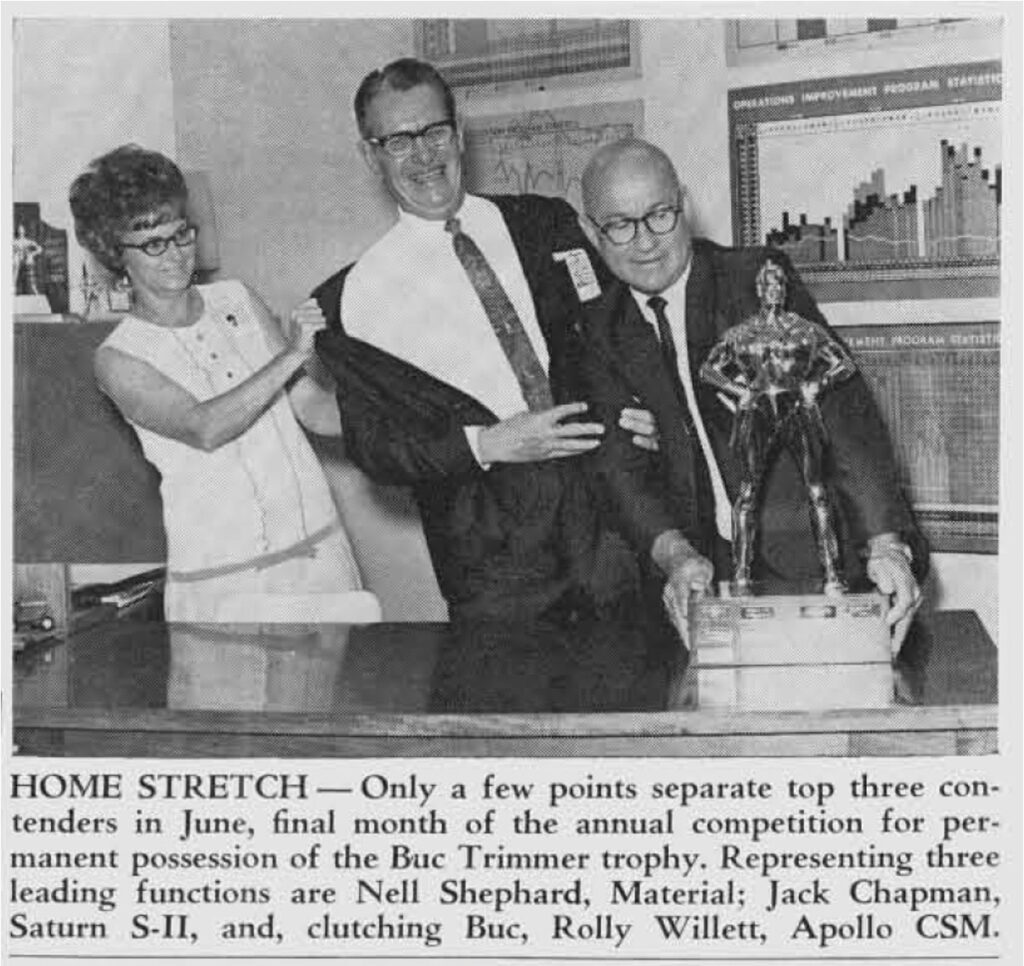
Hence, there was tremendous pressure on the engineers at NAA to identify cheaper materials, cheaper electronic configurations, cheaper fuels, and so on. The engineer who found a cheaper way of doing things would get a trophy.
I found the name of the trophy at NAA was “Buc Trimmer,” an homage to the real Buck Rogers and a bad pun.
The trophy was certainly modeled after Buck Rogers, but it had enough differences to avoid copyright issues (yes, even in the 1960s, lawyers were quick to sue over patents violations). I called the Downey Historical Society in the hopes I would find someone who knew the artist who designed the figure. No luck. They referred me to the Aerospace Legacy Foundation of Southern California. I hit the jackpot when I found the name of the man who knew something about the designer if the figure. Here’s the email.
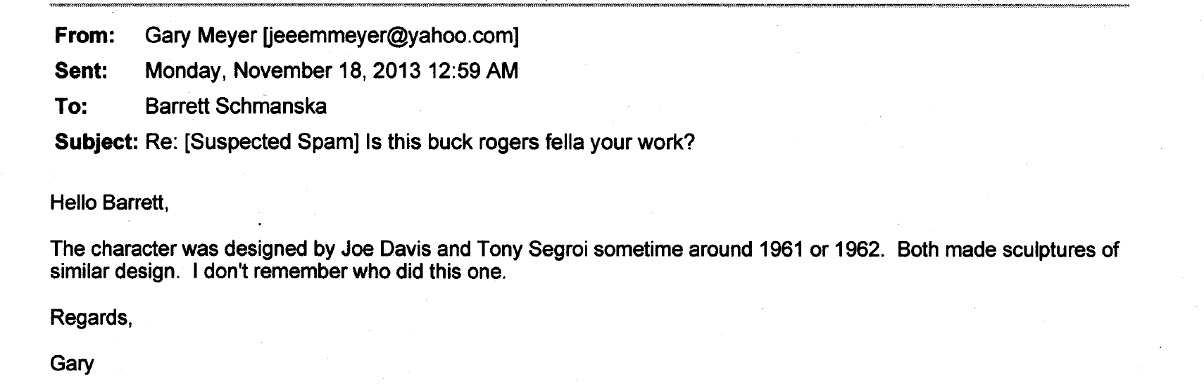
Gary Meyer was one of a group of artists employed by NAA in the 1960s to prepare drawings of the space crafts and astronauts for the space program. These were the days when just about every corporation hired artists to illustrate their newsletters and other publicity materials for public outreach.
Gary Meyer didn’t design my trophy, but he worked with the guys who did. He mentions Tony Sgroi and Joe Davis, both famous storyboard artists and model designers in their day. Both had passed away by the time I got ahold of Gary Meyer.
Gary Meyer went on to be a beloved professor of art at the ArtCenter College of Design in Pasadena. And I mean beloved. He passed away in 2021 and the outpouring of tributes from former students is something else to Google. Here is a couple of photos from North American Aviation’s 1960s era newsletters with photos of the trophy being awarded to staffers.
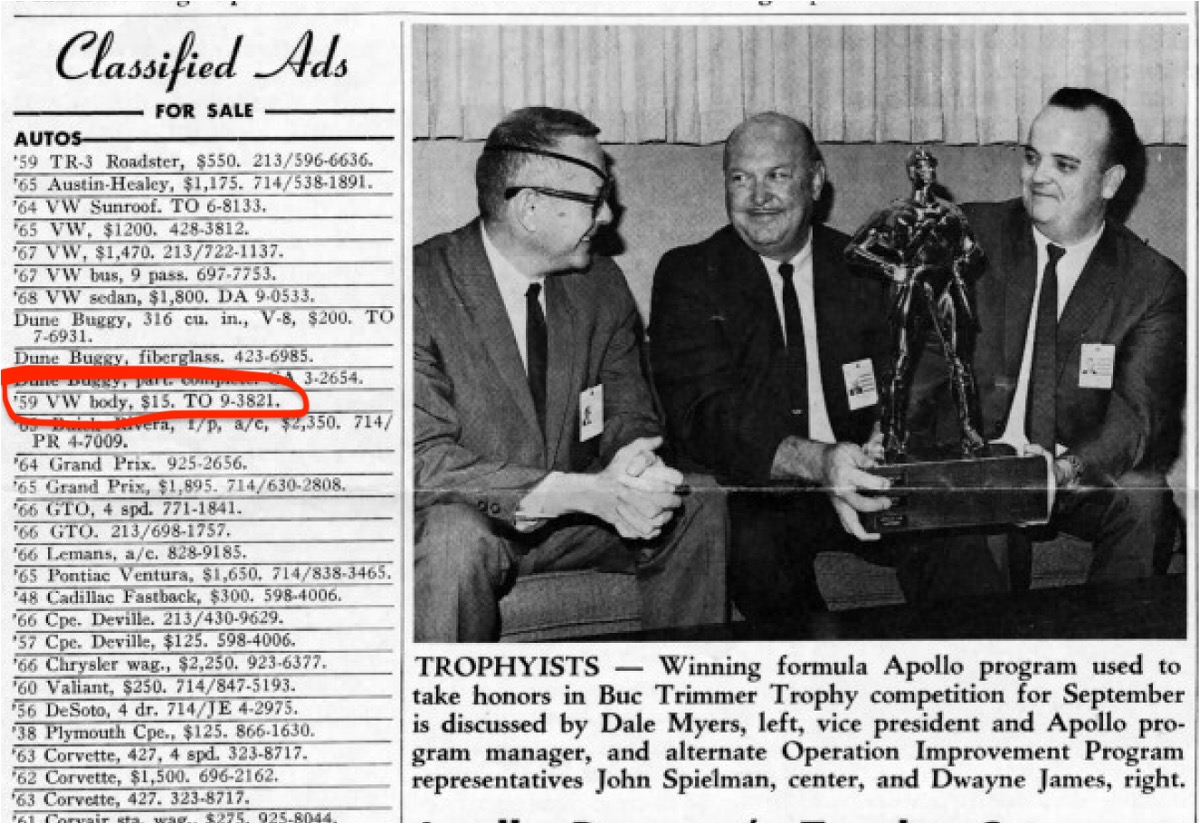
Not to change the subject but someone at North American Aviation in 1968 was selling a 1959 VW bug body for $15. I found one on Facebook for sale in 2024 for $11,000.
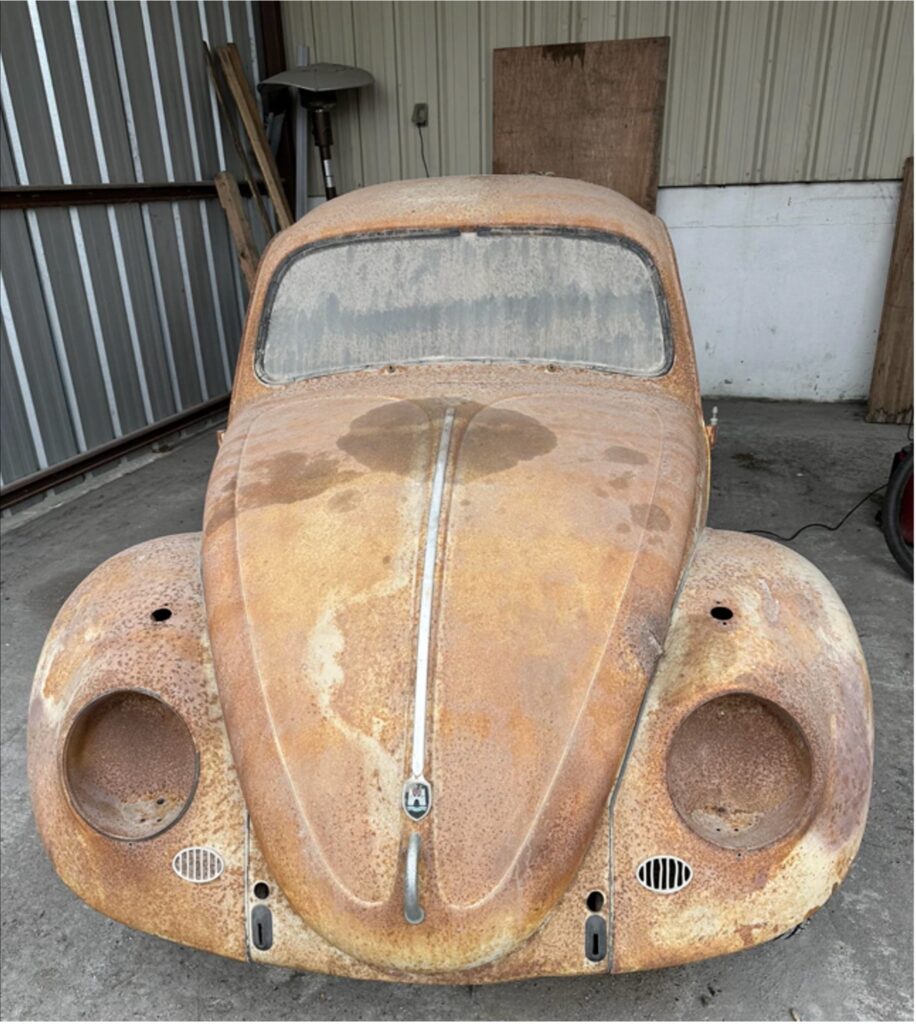
2024 Fbook Ad. Up for grabs is my 59 Texas patina bug. I just got another 911 and will not be working and this anymore. $11k takes it.