This is a blog of stuff I’ve picked up at garage sales and flea markets over the years related to the Port Gamble Mill and Port Gamble S’Klallam Tribe, too. The Port Gamble Mill opened in 1853, making it the first sawmill to open in Washington State. It stayed open until 1995. The mill was patterned after a New England company town, complete with 19th century and early 20th century homes, a company store, a post office, a church, and of course, a spooky graveyard.
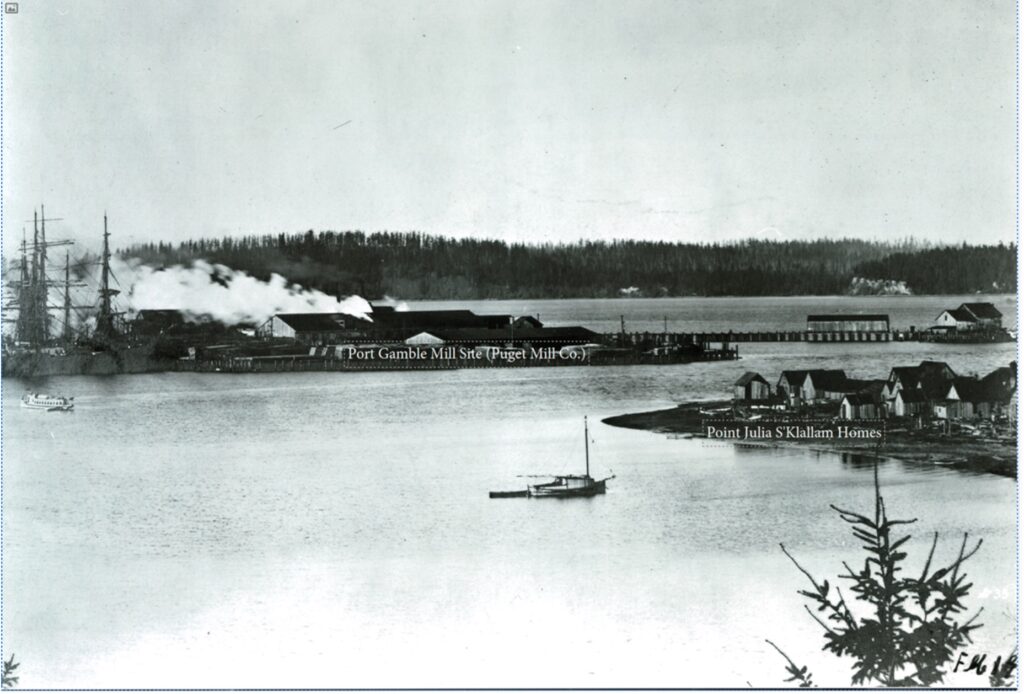
Postcard shows homes of Port Gamble S’Klallam Tribal Members along with Mill site in background. Thanks for Michel Jolivet for photos.
The milled timber from Port Gamble was instrumental in winning World War II when it ran 24 hours a day and provided lumber to build the Liberty Ships, vessels that were unquestionably important to the Allied victory in World War II.
Many members of the Port Gamble S’Klallam Tribe grew up living and working in the mill. Several rose to managerial positions.
The mill and the adjacent company town sit very much the way it did in the 19th century and early 20th centuries. It’s kind of like the Williamsburg of sawmills. But new development is on the horizon, so all you history buffs better visit soon.

Postcard of Port Gamble Mill site early 20th Century
Old Work Boot
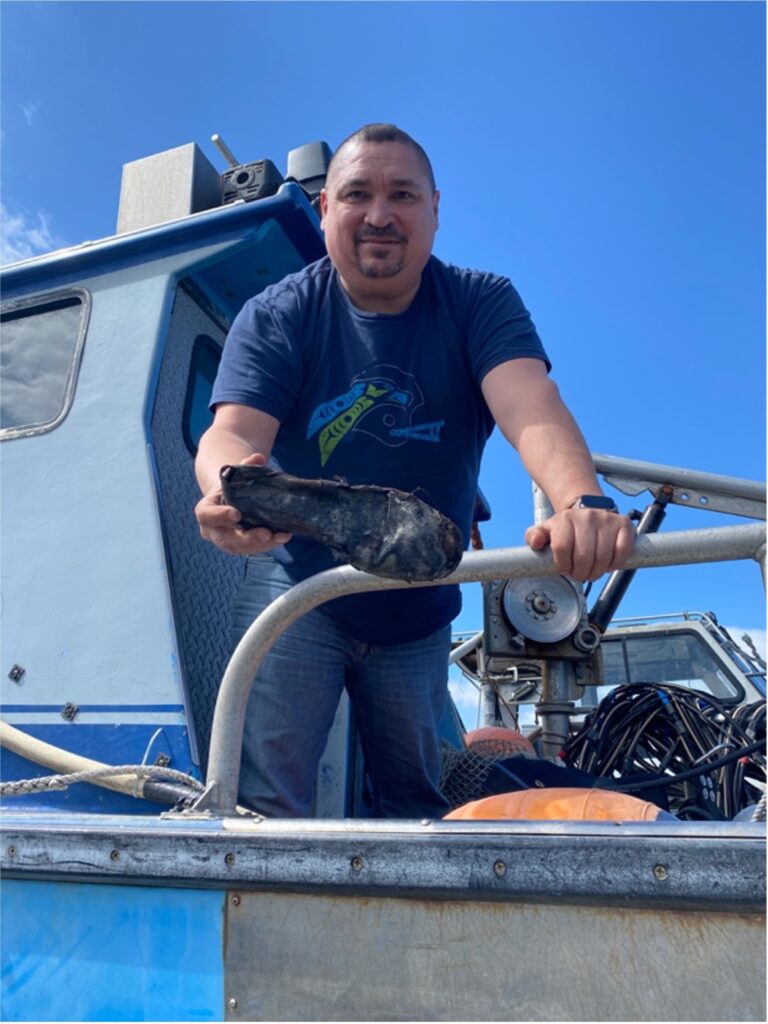
Chris Tom found this old work boot geoduck diving off Port Gamble. Laugh all you want. But the last time a work boot was made with brass cobbler shoe tacks with late 1800s. Could have been a 19th century murder of a logger with one leg.
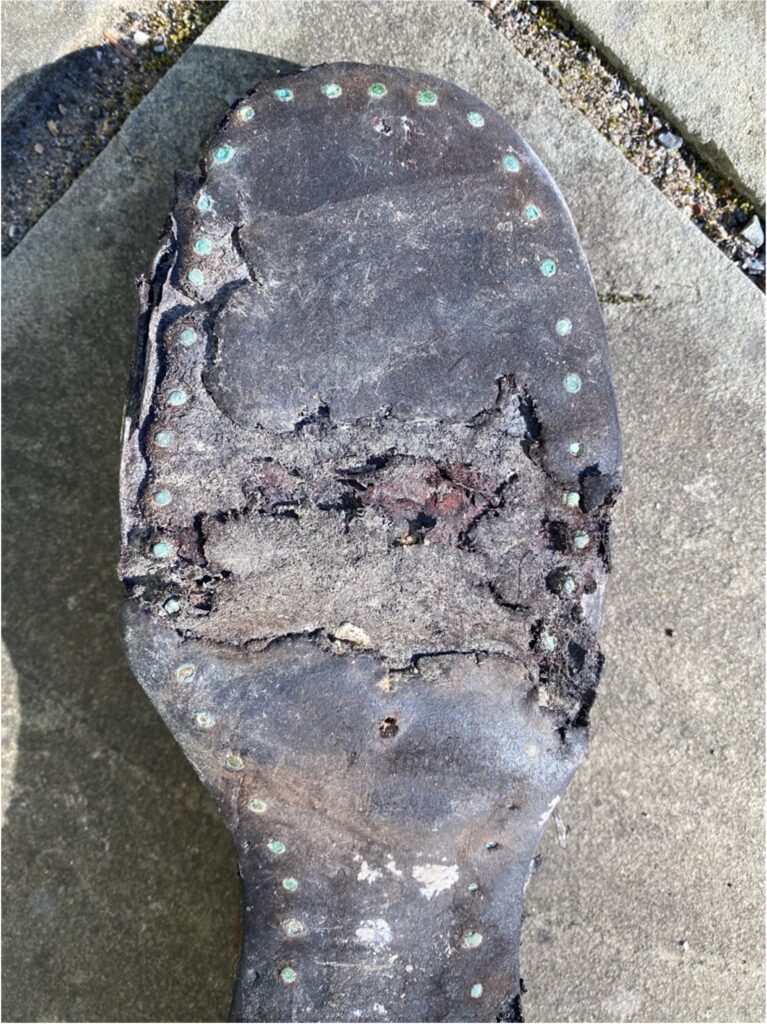
Ever wonder about the saying “getting down to brass tacks” comes from? Shoe soles in the 19th century were nailed on to the sub sole with brass tacks. The nails were set (countersunk) deep into the leather as to not contact the ground. When the sole leather was “worn down to brass tacks” it was time for the sole to be replaced.
Bullet for Sale
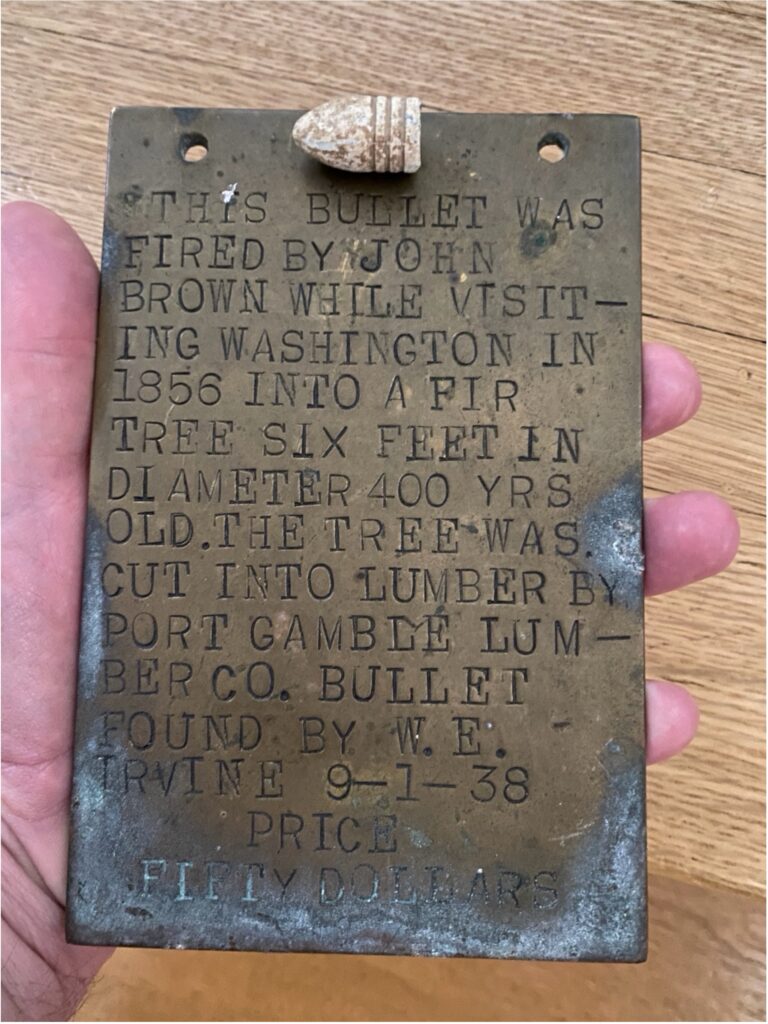
Here’s something I found it last year on the beach at Port Gamble. It doesn’t look like it from the photo, but it’s a very thick and heavy metal panel advertising a famous and (supposedly) valuable bullet. At least the guy selling it thought it was famous and valuable. My guess is that it was once attached to a board slab where you could see the bullet lodged into the wood, but who knows?
Whoever made this thing wanted fifty dollars. Fifty dollars was probably like a thousand when this guy was trying to sell it off!
Old Port Gamble Bible
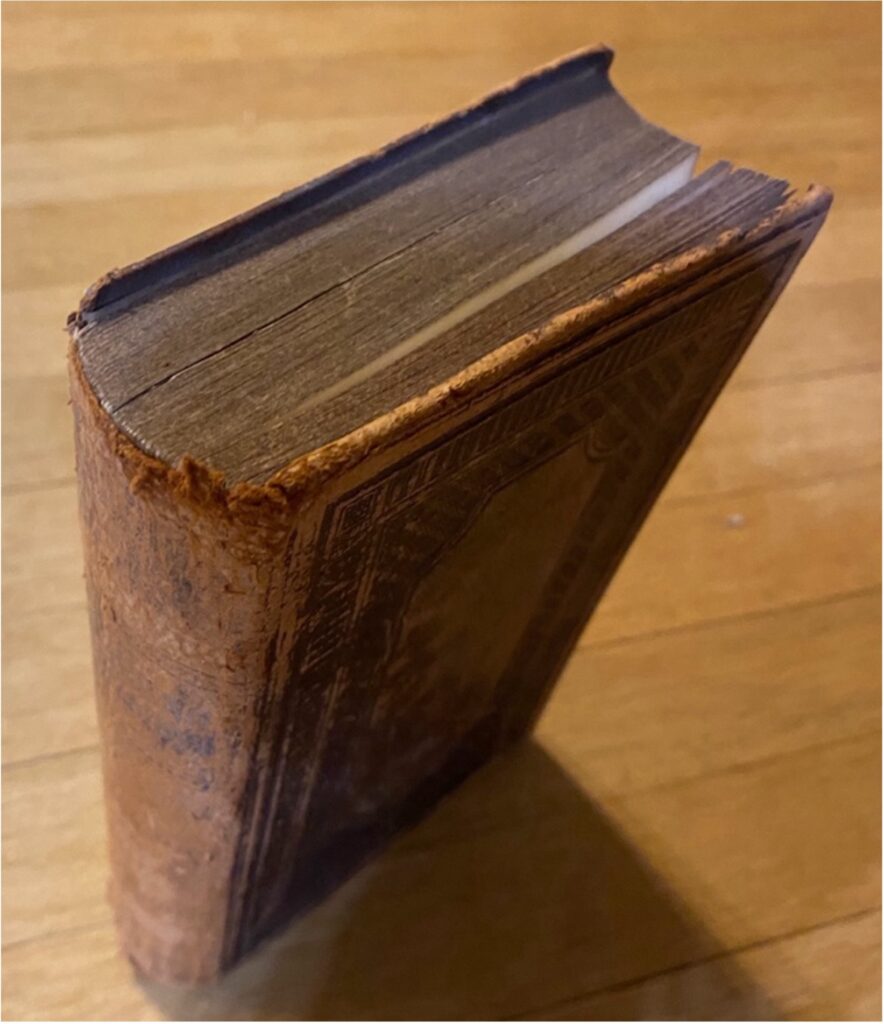
Nowadays we have the internet and DNA and genealogy websites to find our relatives and build family trees. But in the old days, births, marriages, and deaths were recorded in family Bibles. Some Bibles even had dedicated pages for recording family history. The importance of these Bibles cannot be overstated. Tens of thousands of wives used their Bibles to prove their eligibility for war pensions when husbands were killed during the Civil War. Same with land titles and other common property. Disputed wills and inheritance could be resolved by the family information in the Bibles.
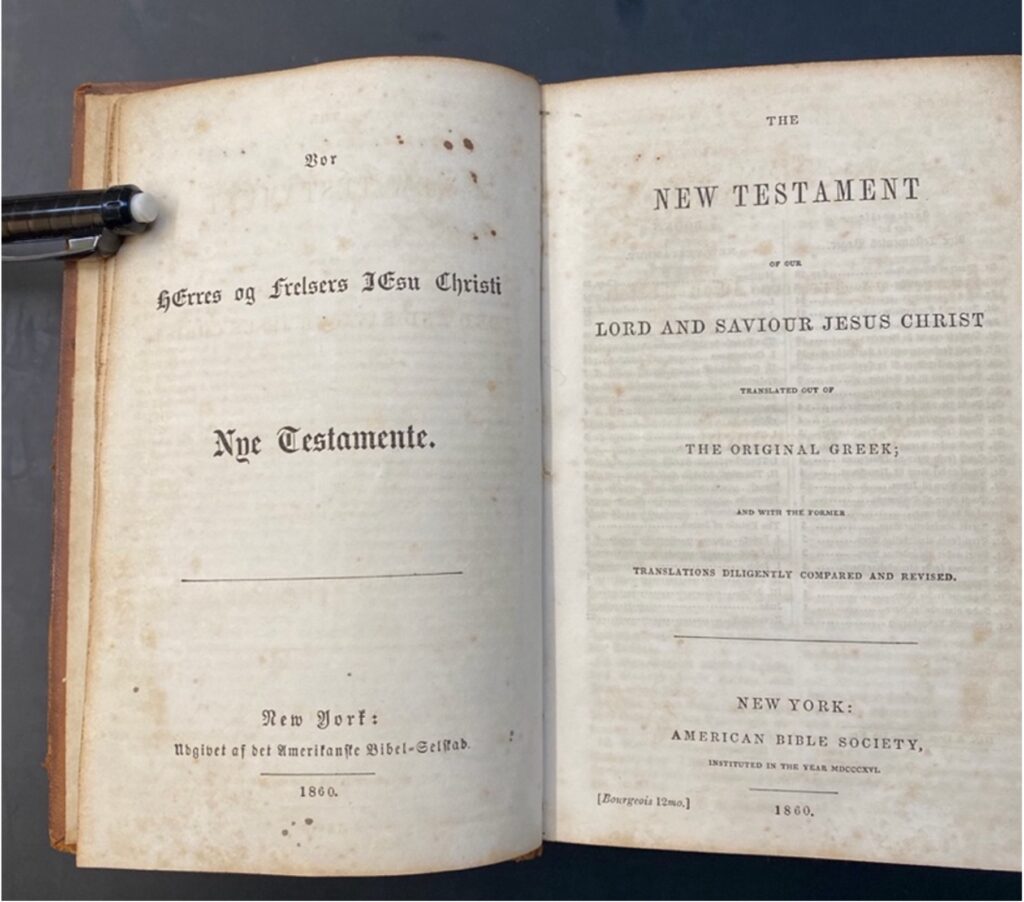
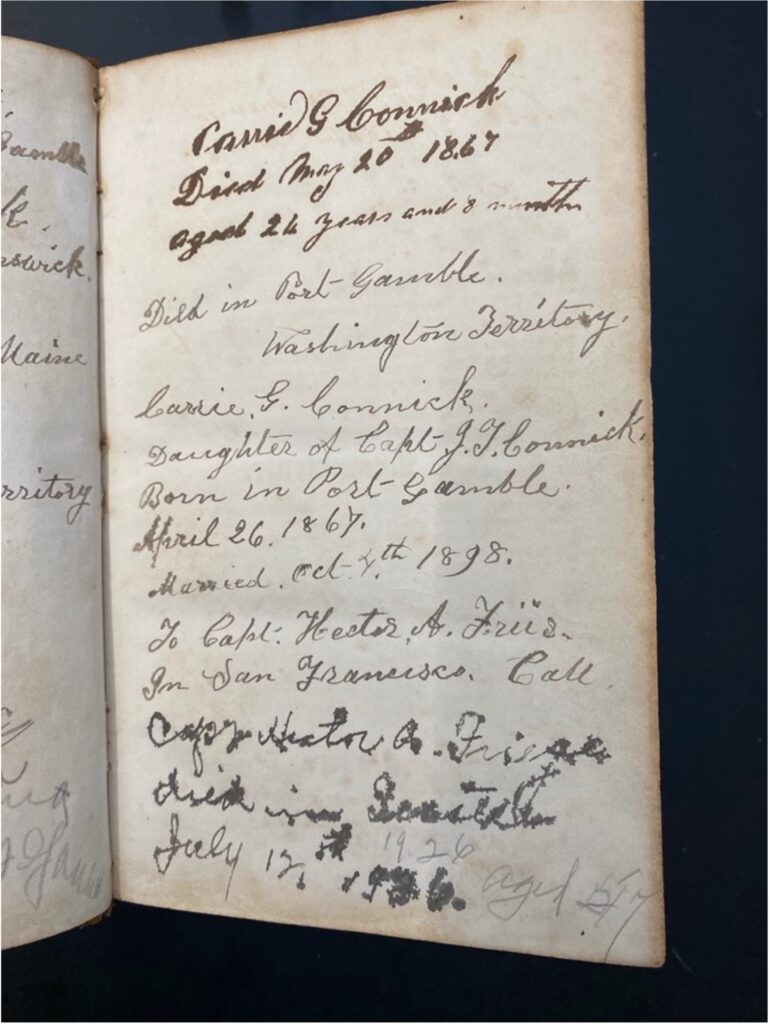
I somehow stumbled on this Bible of a family who lived at the Port Gamble Mill site. I think I got it at an antique shop in Poulsbo.
It is a rare 1860 Danish English parallel translation issued by the New York American Bible Society who were on a mission to teach English to immigrants.
This copy belonged to Captain John T. Connick of Port Gamble, Washington Territory. He married Carrie G. Harmond, c. 1860 in Port Gamble. Connick was Captain up and down the coast between San Francisco and Port Gamble,. The Bible was then passed to Captain Hector A Friis of San Francisco (presumably at Connick’s death). He was Assistant Harbor Master there. Friis became a Captain in Honolulu, HI, Hilo, HI, and points beyond and in between.
Model Canoes from Port Gamble
Cheryl Strange is a legendary Washington State government administrator, excelling at some of the most difficult jobs in Olympia. She started her career as a nurse and by 2008 was managing a DSHS budget of over $900 million and a staff of 2,000. She also took over as the CEO of Western State Psychiatric Hospital when it was almost bankrupt.
She also has a close connection to the Port Gamble S’Klallam Tribe.
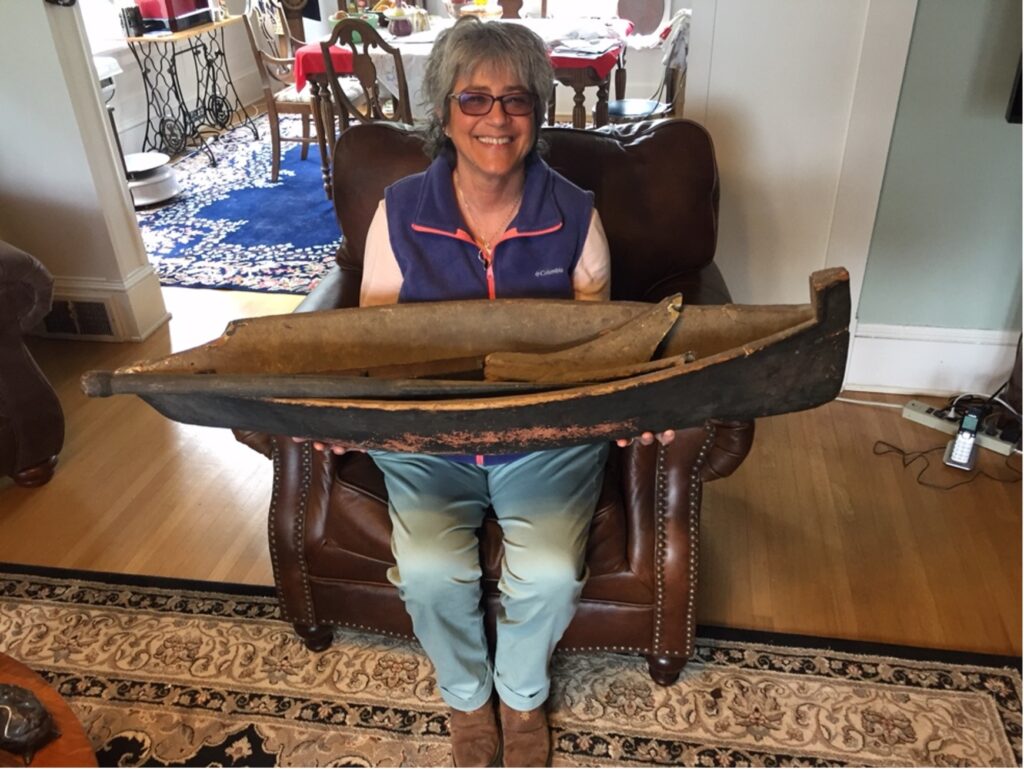
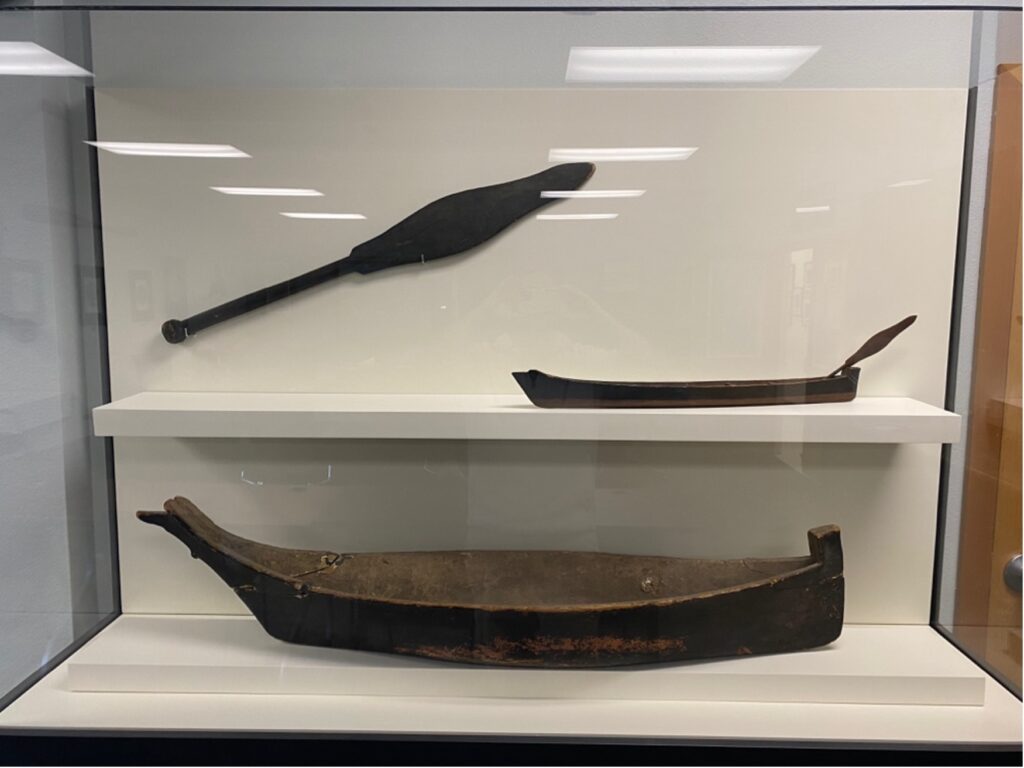
When Cheryl’s mother passed away in 2016, she was going through her mother’s things when she came across two old carved canoes in the attic of her house. She remembered them from her childhood, and her mother telling her that they were too meaningful and important to play with.
Where did they come from? Cheryl knew her family had deep roots in Kitsap County but knew very little of the individuals that made up those roots. Fortunately, she remembered that her great great grandfather, Albert Clawson, was a teacher at the Port Gamble Day School. There were enough clues to figure out that large canoe was made by the students at the school and given to Clawson, perhaps at his retirement. Clawson taught at the school from 1896 until nearly his death in 1903 at 45. The smaller canoe was given to Sarah Clawson who is listed as the “housekeeper” in school records. The carver is unknown, but it is presumed that one or more of the students carved it.
There was also a paddle amongst the canoes and paperwork. Cheryl doesn’t know anything about the paddle but assumes it was also a gift to her Clawson.
Below is a picture of Cheryl at my house. Kelly Sullivan, the Tribe’s Executive Director, arranged for Cheryl to drop off the carvings at my house when Cheryl was on her way to a Mariner’s game. Today, they are proudly displayed in the Tribal Conference Room.
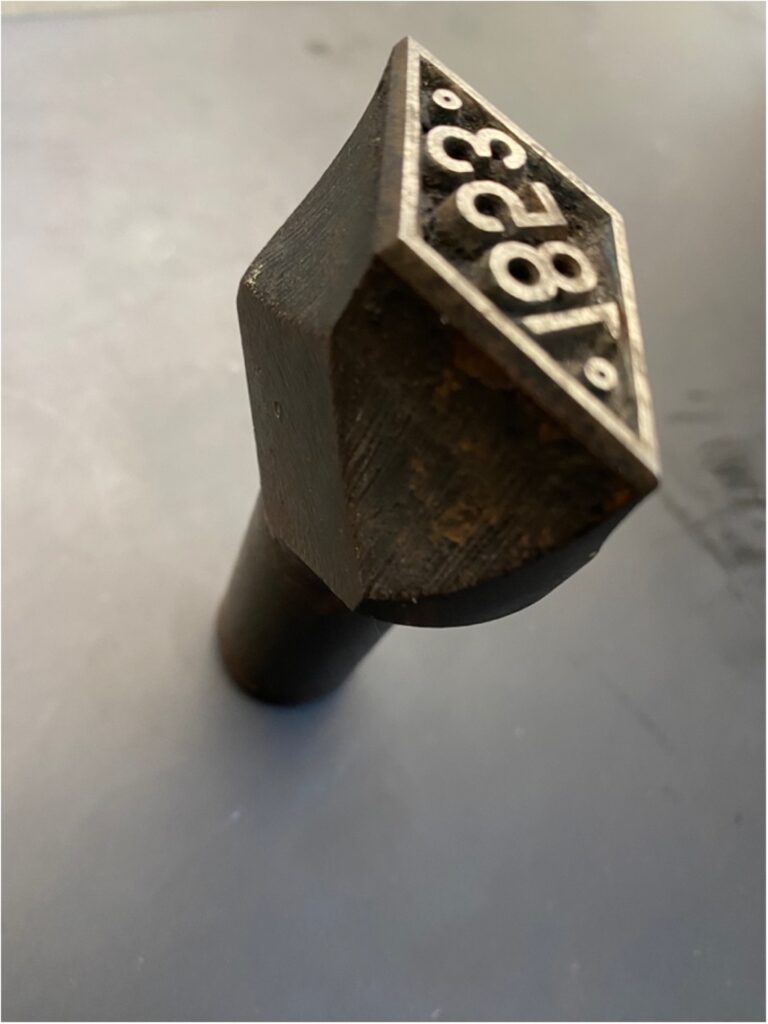
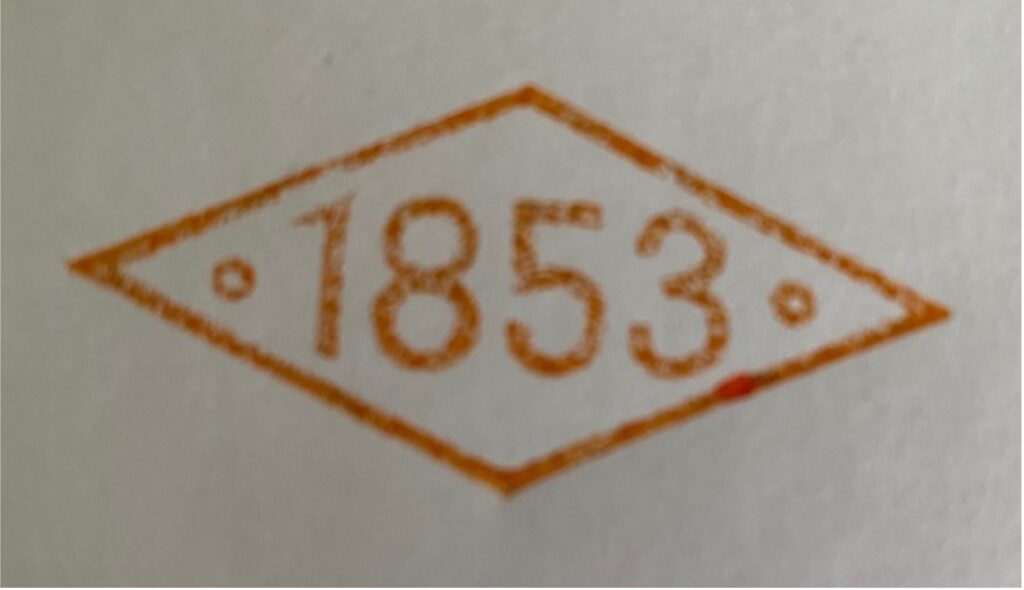
Port Gamble Mill Log Stamp
I bought this log stamp online from a guy who was in Texas but used to live near the Hood Canal Bridge. He told me in an email that while living near the bridge he took care of an old man who lived across the street from him. The old guy worked at the mill “forever,” and he gave him the log stamp. “I’m glad to see it back in Washington,” he told me in an email from his new home in Texas.
The stamp commemorates the year 1853. The mill cut its first log in September 1853, becoming the longest continuously operating lumber mill in the U.S. until it closed in 1995.
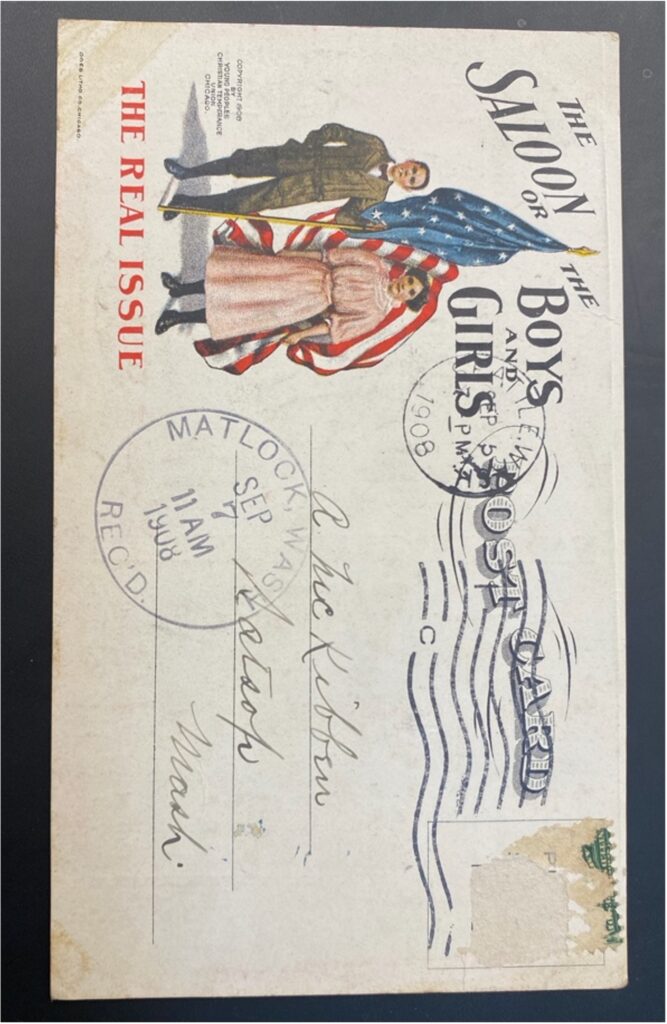
The Saloon and the Reverend at Port Gamble
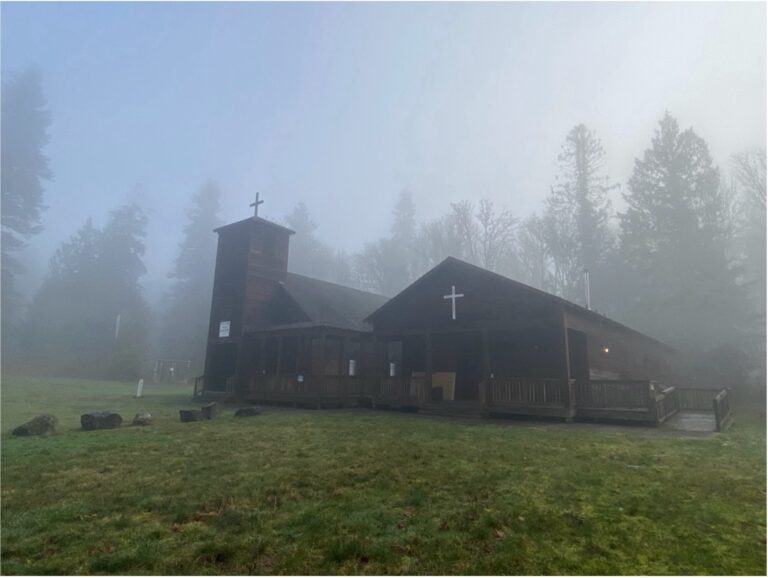
This is an advertising mailer broadcasting an incident on Port Gamble where the Reverend of the Port Gamble Episcopal Church was fired from the town church (that’s still there) and told to leave his house and the community. Since Port Gamble was a privately owned “company town,” getting fired, kicked out of your home and banished from ever returning was always a possibility. I guess the Reverend found all this out.
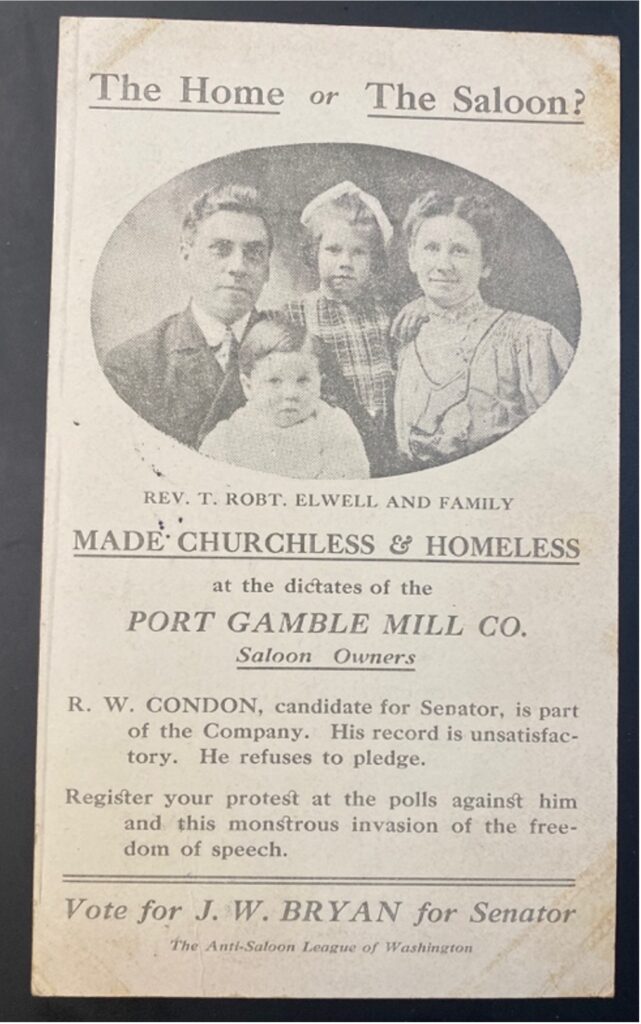
But why was the Reverend told to leave?
Apparently, the Reverend at the Port Gamble Mill preached the evils of alcohol to his Sunday flock who likely heeded his call for abstinence, which (I guess) started to impact the bottom line at the saloon. Or maybe the patrons of the saloon were tired of being singled out as devotees of the devil. In any event, the Reverend’s call for abstinence aggravated the mill owners and he and his family were told to leave.
So, who printed this flyer? It was Woman’s Christian Temperance Union (WCTU) who were organized, well-funded and on a mission to make alcohol illegal. They would eventually succeed in making alcohol illegal nationwide over a 13-year period (1920 to 1933) before the law was repealed.
There’s a political angle to this as well. Apparently, mill owner R.W. Condon was running for State Senator and had something to do with the Reverend getting booted. The flyer is telling people that Mr. Condon is not fit to be a Senator given his support of the saloon and willingness to render a man of the cloth and his family homeless. Instead, people should vote for J.W. Bryan (who did win).
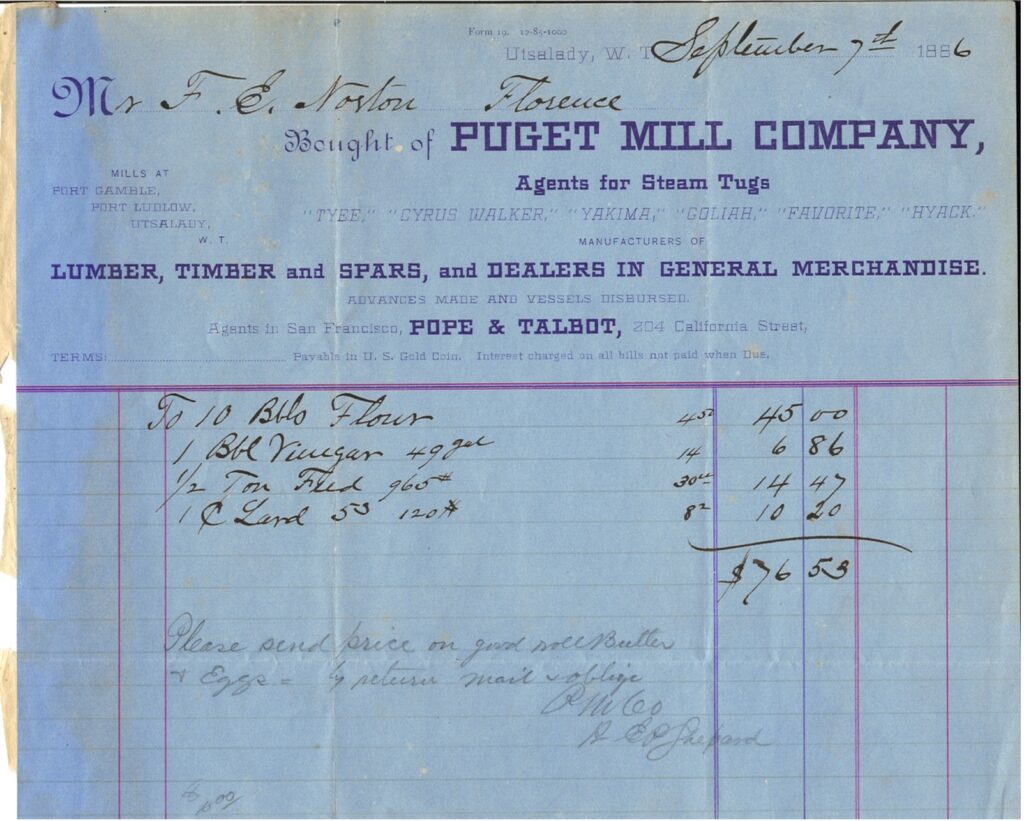
1886 Bill for Butter, Eggs, Flour, Vinegar, Etc.
Here’s an itemized bill for provisions for a tug leaving Port Gamble for destinations unknown!
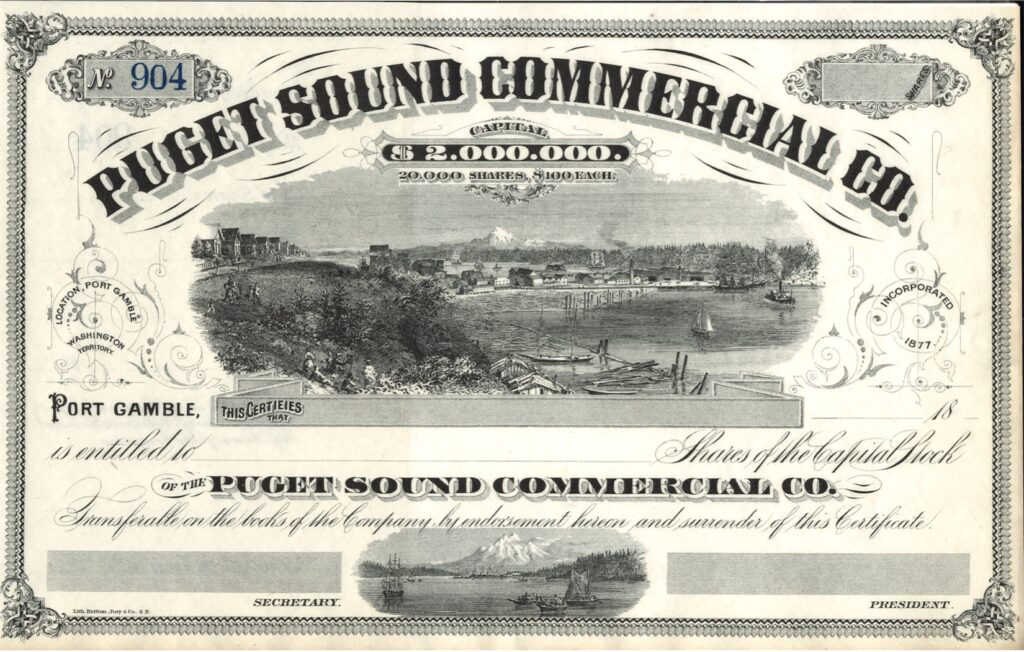
Port Gamble Mill Stock Certificate
The Microsoft stock of the late 1800s in Washington State.