When I first arrived at the Port Gamble S’Klallam Tribe, I was intrigued by several cannonballs on display in the lobby of the Tribal admin building. They had been unearthed or found in felled trees on the bluff overlooking Port Gamble Bay. Did the S’Klallams get into a battle with white people back in the cannon days? After all, there were several conflicts back then, including the Puget Sound War, the Cayuse War, and the Yakima War. It wouldn’t be surprising that the violence spread to Little Boston.
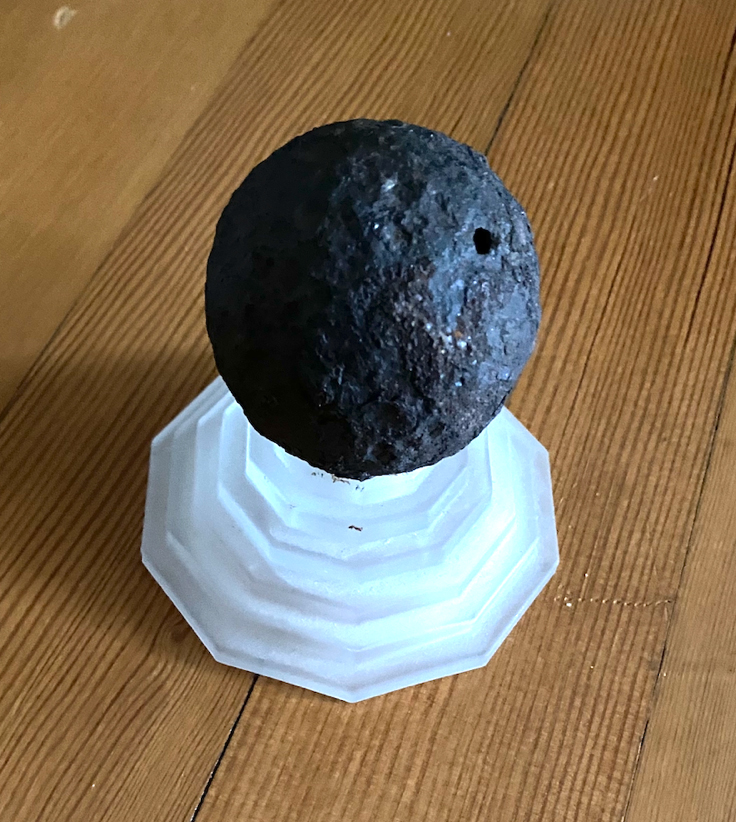
Small 3” Cannonball found by Port Gamble S’Klallam Tribal Member and Elder Daryl Sullivan
Not a single Tribal Member I talked to, young or old, had heard about such a battle or a S’Klallam war with white people.
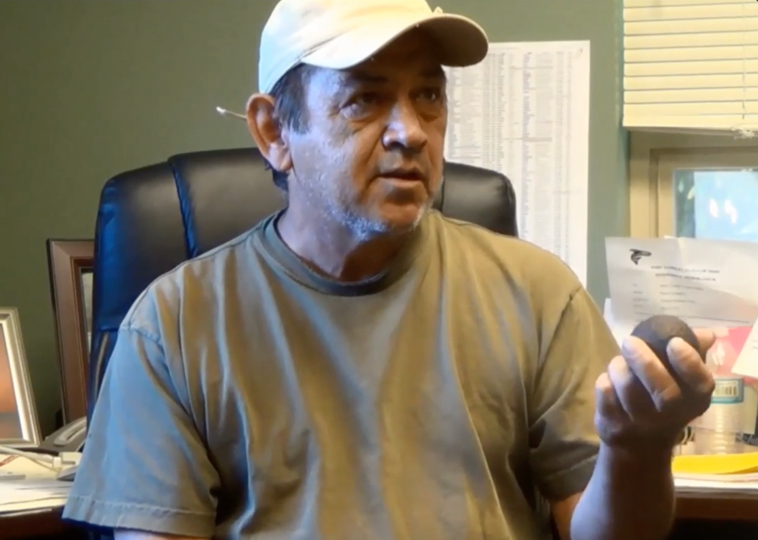
Daryl Sullivan in Barrett’s famous 2010 documentary the Battle of Port Gamble. (Winner of several Awards held annually at the Grub Hut in Greater Kingston).
So, what gives? Why the cannonballs?
In my famous 2010 documentary, it turns out that Jolene (in the video) is right about their origin and shamelessly ruins the History 101 grade curve for the rest of us. She posits that the cannonballs were shot at Alaska Native warriors who routinely traveled to Puget Sound in search of slaves and bounty. That’s about a thousand miles of paddling, folks. We’re not talking kayaks purchased at REI. The Haida and Tlingit warrior traveled in 60-foot canoes that held up to one hundred warriors and their gear. Here are a couple of documented incursions in the second part of the 19th century.
- In 1860, Snohomish (Tulalip) warriors fought a vicious and victorious battle on the Snohomish River against Tlingit raiders from Alaska.
- In 1869, Suquamish warriors fended off an attack on Bainbridge Island by Haida raiders from Alaska.
- In 1856, S’Klallam and white mill workers took cover from Alaskan Tlingit raiders in a log “safe house” until they were rescued by a US Navy ship patrolling Puget Sound.
That’s right, in 1856 Tlingit raiders from today’s Kake, AK decided to pull up on Point Julia on what is now the Port Gamble S’Klallam Reservation and take whatever they could by force. They had already killed numerous Natives and white people in Puget Sound. Unfortunately for them, the one US Navy battleship patrolling Puget Sound waters had been trying to catch them for several days and finally caught up with them on Port Gamble Bay. The Tlingit warriors were asked to leave, but they refused and wanted to fight. Unfortunately for them, they were no match for the cannon fire coming from the ship. Scores of Tlingit warriors were killed, and the survivors were taken into custody and dropped off at the Russian border (today’s Alaska state line).
There are 27 Haida warriors buried somewhere on the beaches of Point Julia.
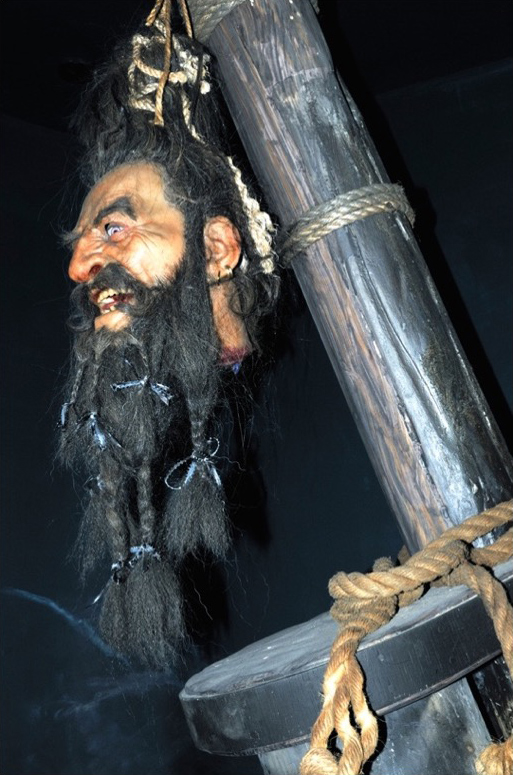
The following year, in 1857, the Tlingits returned to Puget Sound looking for vengeance. They happened upon Colonel Isaac Neff Ebey on Whidbey Island who was killed and beheaded.
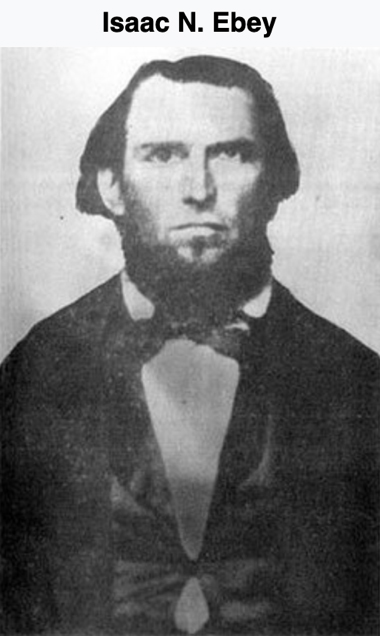
Ebey’s head was taken back to Kake, Alaska.
The next year (1858), Captain Charles Dodd of the Hudson’s Bay Company sailed to Kake and traded for Ebey’s head. He brought it back to Port Townsend and handed it over to the Ebey family. Oddly, the head was never buried with the rest of Ebey. Internet sleuths indicate that the head ended up in Berkeley California in the early 1900s with the Ebey family. But then it disappeared.
In 2013, 158 years after the battle at Port Gamble, S’Klallam Chairman Ron Charles and Cultural Director Marie Hebert visited Kake on a reconciliation trip (and to scope out future fishing trips). Ron and Marie were greeted with great fanfare and were treated like royalty for several days, including a spectacular whale watching adventure, fantastic food and lots of speeches and conversation.
In 2014, a contingent of leaders from Kake met with the family of Ebey on Whidbey Island for a reconciliation. They flew into Seatac this time. There were laughter, apologies and reflection. The gathering was at Ebey’s Landing, a National Historic Reserve, and was met with a huge contingent of reporters from both the broadcast and print/internet media.
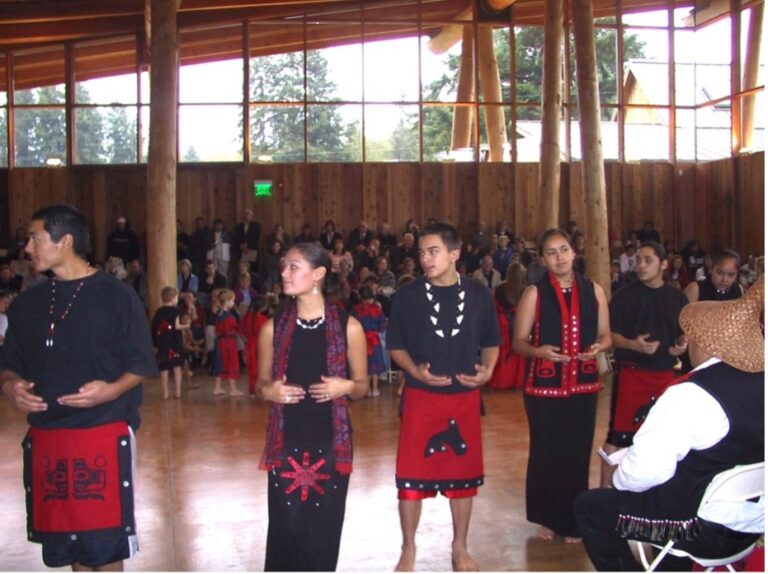
On the same 2014 reconciliation trip, the Kake contingency swung by Little Boston for more food and friendship. Port Gamble S’Klallam Tribal Member Francine Swift was there to document the meeting. The following are Francine’s photos.
Here are a couple of photos of the gathering taken by Francine Swift.
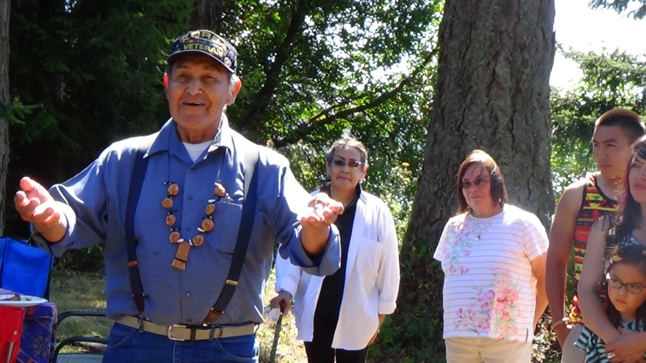
Marvin Kadake offers a blessing at the Port Gamble S’Klallam – Kake Gathering
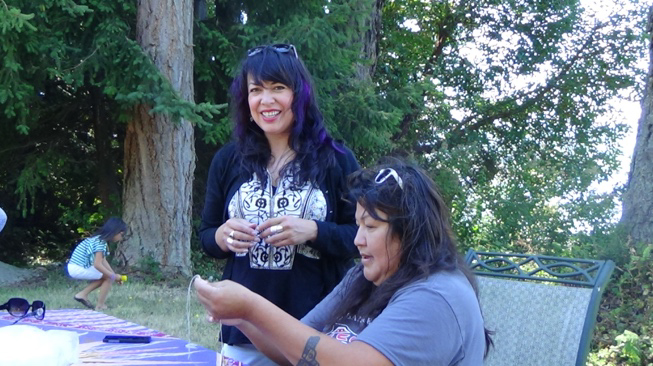
Dawn Jackson (Background) and Mary Jones (Foreground)